
These 10 board-style microbiology questions cover the high-yield facts that USMLE Step 1 and medical school exams test again and again: toxins, culture media, classic infections and first-line treatments. Pick an answer, then open Answer and Explanation to check yourself.
Questions written by Dr. Ray Makar, retired dermatologist and USMLE teacher.
Bacteria and Their Toxins
Q1. A 23-year-old man develops bloody diarrhea 3 days after eating an undercooked hamburger. A week later he has thrombocytopenia, schistocytes on the blood smear and acute kidney injury. How does the responsible toxin work?
A. Activates adenylate cyclase by ADP-ribosylation of the Gs protein
B. Inactivates the 60S ribosomal subunit by cleaving rRNA
C. Inhibits acetylcholine release at the neuromuscular junction
D. ADP-ribosylates elongation factor 2 (EF-2)
Answer and Explanation
B. Inactivates the 60S ribosomal subunit by cleaving rRNA. This is hemolytic uremic syndrome caused by enterohemorrhagic E. coli O157:H7. Its Shiga-like toxin stops protein synthesis by cleaving rRNA of the 60S subunit. Option A is cholera toxin, C is botulinum toxin and D is diphtheria toxin.
Q2. An unvaccinated 6-year-old boy has fever, sore throat and marked neck swelling. A gray membrane on the tonsils bleeds when scraped. Which culture medium is used to grow the organism?
A. Bordet–Gengou agar
B. Chocolate agar with factors V and X
C. Tellurite agar
D. Thayer–Martin agar
Answer and Explanation
C. Tellurite agar. Corynebacterium diphtheriae grows on tellurite agar (black colonies) and Loeffler medium. Bordet–Gengou agar is for Bordetella pertussis, chocolate agar with factors V and X is for Haemophilus influenzae, and Thayer–Martin agar is for Neisseria.
Q3. A man develops profuse “rice-water” diarrhea after travelling to an area with poor sanitation. The toxin responsible increases intracellular cAMP. How does it do this?
A. ADP-ribosylation of the Gs protein, keeping it permanently active
B. ADP-ribosylation of the Gi protein, blocking inhibition
C. Cleavage of SNARE proteins
D. Direct binding to the CFTR channel
Answer and Explanation
A. ADP-ribosylation of the Gs protein. Cholera toxin keeps Gs switched on, so adenylate cyclase stays active and cAMP rises. Chloride and water then pour into the gut lumen. Pertussis toxin acts on Gi (option B), and botulinum and tetanus toxins cleave SNARE proteins (option C).
Q4. A non-encapsulated strain of Streptococcus pneumoniae becomes encapsulated and virulent after taking up DNA released from lysed encapsulated bacteria. Which process of genetic transfer is this?
A. Conjugation
B. Transduction
C. Transformation
D. Transposition
Answer and Explanation
C. Transformation. Transformation is the uptake of naked DNA from the environment, the basis of Griffith’s classic experiment. Conjugation needs a sex pilus, transduction uses a bacteriophage, and transposition is DNA “jumping” within a genome.
Q5. A patient with sickle cell disease develops osteomyelitis. Which organism is classically associated with osteomyelitis in this setting?
A. Pseudomonas aeruginosa
B. Salmonella species
C. Staphylococcus epidermidis
D. Streptococcus pyogenes
Answer and Explanation
B. Salmonella species. Salmonella is the classic cause in sickle cell disease, although Staphylococcus aureus is still the most common cause of osteomyelitis overall. Pseudomonas is linked to puncture wounds through a shoe.
Q6. A patient develops severe watery diarrhea a week after a course of clindamycin. Colonoscopy shows yellow pseudomembranes. What is the recommended first-line treatment?
A. Intravenous vancomycin
B. Oral ciprofloxacin
C. Oral fidaxomicin or oral vancomycin
D. Oral loperamide
Answer and Explanation
C. Oral fidaxomicin or oral vancomycin. This is Clostridioides difficile colitis. Vancomycin must be given by mouth to reach the colon (IV vancomycin does not). Antimotility drugs such as loperamide should be avoided.
Fungi, Viruses and Parasites
Q7. A 35-year-old man with HIV and a CD4 count of 50 cells/mm³ has headache, fever and neck stiffness. India ink staining of the cerebrospinal fluid shows encapsulated yeast. What is the most appropriate initial treatment?
A. Amphotericin B plus flucytosine
B. Caspofungin
C. Fluconazole alone
D. Trimethoprim–sulfamethoxazole
Answer and Explanation
A. Amphotericin B plus flucytosine. This is cryptococcal meningitis. Induction is amphotericin B plus flucytosine, followed by long-term fluconazole. Echinocandins such as caspofungin do not work against Cryptococcus.
Q8. A 4-year-old unvaccinated child has fever, cough, runny nose and red eyes. Small white spots appear on the buccal mucosa, followed by a rash that starts at the hairline and spreads downward. Which virus family causes this disease?
A. Paramyxovirus
B. Parvovirus
C. Picornavirus
D. Herpesvirus
Answer and Explanation
A. Paramyxovirus. This is measles (rubeola), with cough, coryza, conjunctivitis and Koplik spots. Vitamin A reduces complications in children. Parvovirus B19 causes “slapped cheek” fifth disease.
Q9. A hiker develops foul-smelling, greasy diarrhea and bloating 2 weeks after drinking untreated stream water. Which organism is most likely responsible?
A. Cryptosporidium parvum
B. Entamoeba histolytica
C. Giardia lamblia
D. Shigella species
Answer and Explanation
C. Giardia lamblia. Giardia causes fatty, foul-smelling diarrhea (malabsorption) without blood. Cysts or trophozoites are found in the stool, and treatment is metronidazole or tinidazole. Entamoeba and Shigella cause bloody diarrhea.
Q10. A 28-year-old man has a single painless genital ulcer with a firm, raised border. Darkfield microscopy shows spirochetes. What is the treatment of choice?
A. Azithromycin
B. Benzathine penicillin G
C. Ceftriaxone
D. Doxycycline
Answer and Explanation
B. Benzathine penicillin G. A painless indurated chancre is primary syphilis (Treponema pallidum). A single intramuscular dose of benzathine penicillin G is the treatment of choice. Doxycycline is an alternative for patients allergic to penicillin (but not in pregnancy).
Want More Step 1 Questions?
If these were useful, try Repeated USMLE Questions Step 1 Review Vol 3: frequently repeated Step 1 questions with answers and explanations, covering microbiology and the other basic sciences.
Get Step 1 Review Vol 3 on Amazon →
More free practice: Pharmacology questions · Pathology questions · Step 2 CK clinical questions · All practice questions
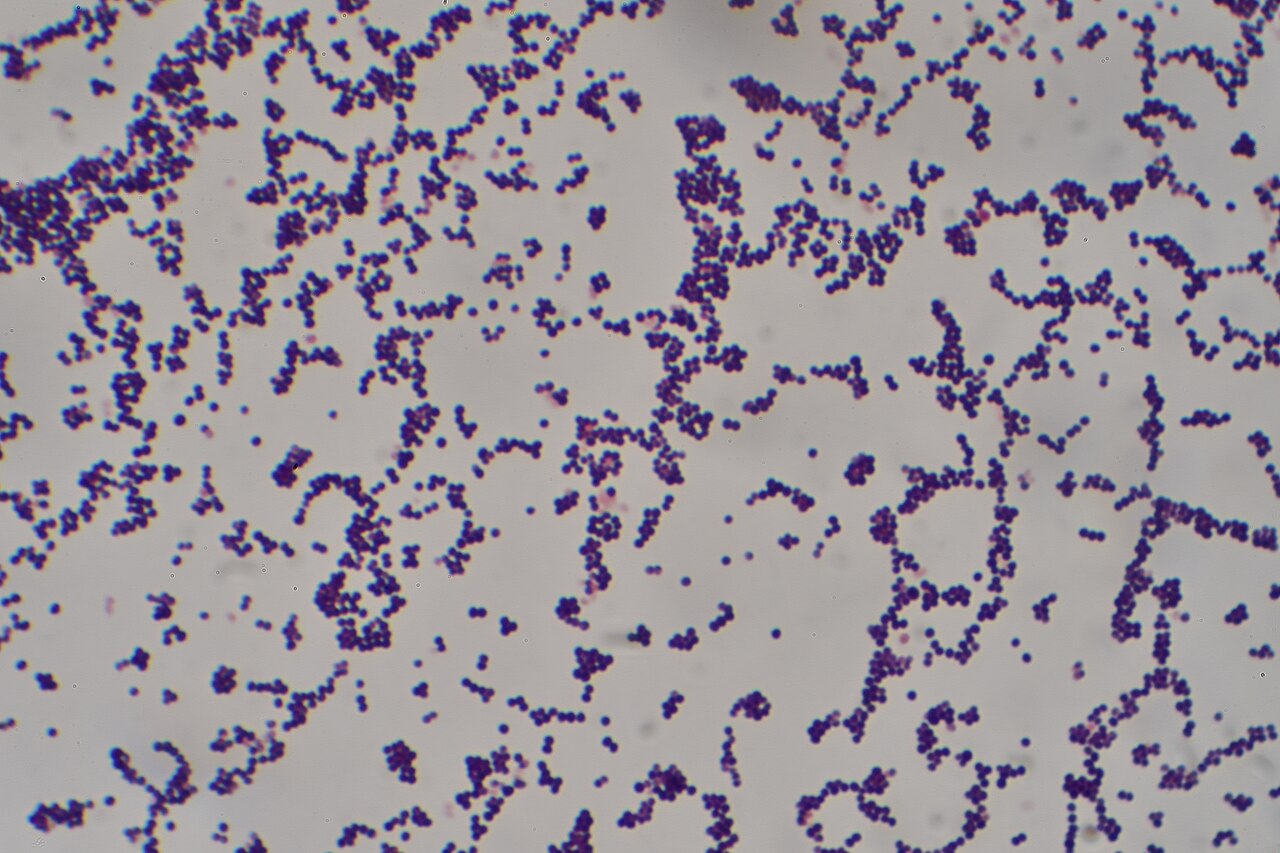
Featured image: Dr Graham Beards, CC BY-SA 4.0, via Wikimedia Commons